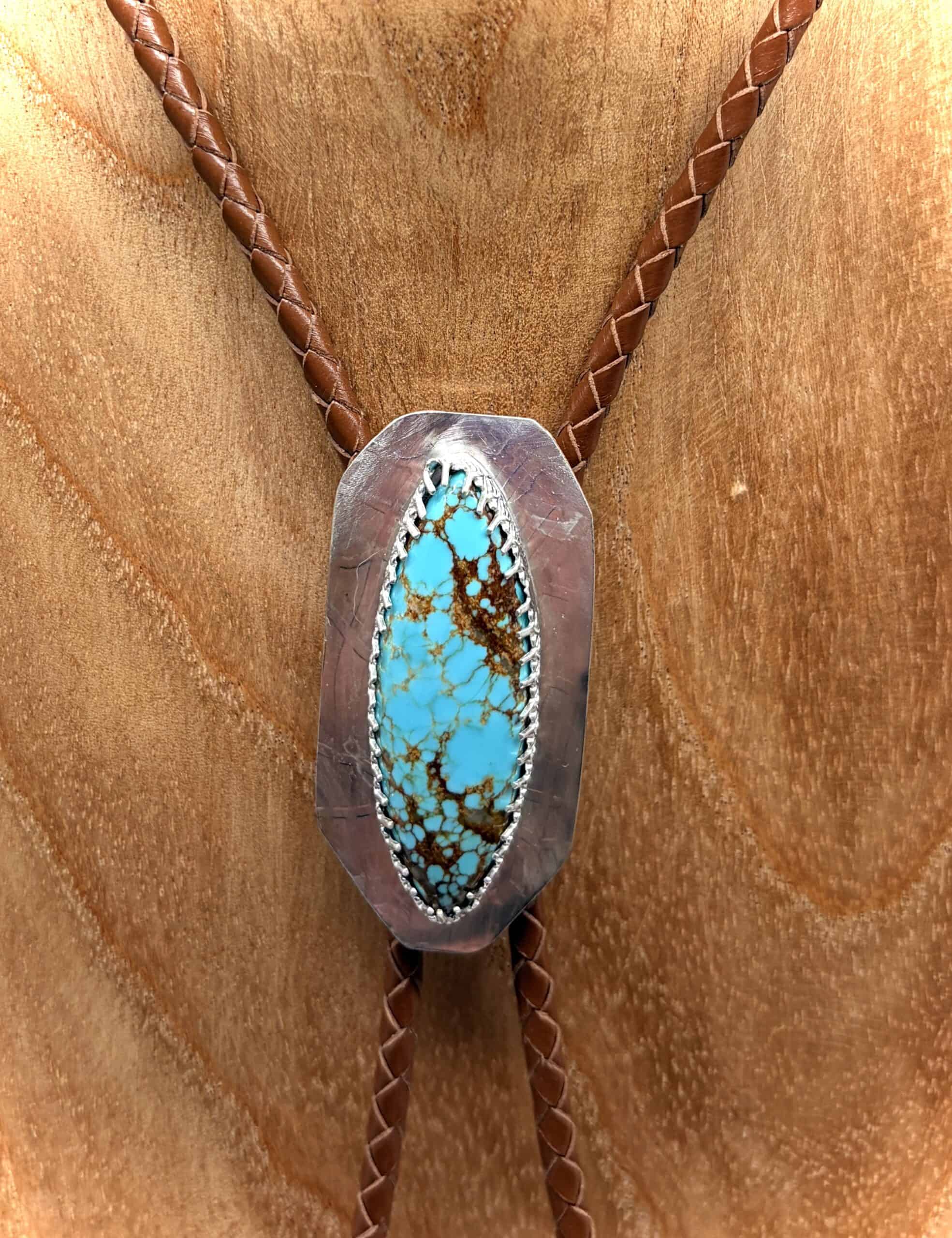
A few years ago a customer asked me to fashion a bolo tie for him. While I had never created this type of design, I was up for a new challenge. Let’s just say this was quite the learning curve. I did lots of research and dove rignt in. The finished design was beautiful.
Afterwards I went back to creating my pendant, ring, cuff and earring designs. In the back of my mind though, this Bolo idea kept looming. Yes, you guessed it. I could not stop until I explored more wasy to create this fashion accessory. What follows is a history of Bolos along with my current designs and the processes I used to create more unusual pieces.
Where the bolo tie came from
By the 1940s and 1950s, those ideas had started to settle into the look people know today.
The modern bolo tie took shape in the Southwest during the early and mid-20th century. Still, its roots reach back to older neckwear worn by ranchers and traders. Some stories point to one inventor, but the stronger record shows a style that grew over time in one region. That slow growth matters because the bolo tie is a folk form before it is a fashion product.
Before the bolo tie had a fixed name, people in the West wore leather cords with slides, clasps, and small ornaments. Some held scarves in place. Others hung under an open collar like simple jewelry. These forms worked well in heat and dust, and they asked less of the wearer than a long cloth tie.
The Southwest influence that shaped its style
Arizona, New Mexico, and nearby states gave the bolo tie its materials and its mood. Silver mattered because Southwestern silversmithing was already strong. Turquoise brought color and local identity. Braided leather kept the piece tied to ranch life and dry-country dress.
Designs often drew from desert plants, thunderbirds, sunbursts, and geometric patterns. Some slides were plain and polished. Others were hand-cut, stamped, or set with stone. That range is part of the history. The bolo tie was never one fixed uniform. It was a local style with many hands behind it.
Creativity and Variety is the way I tend to create
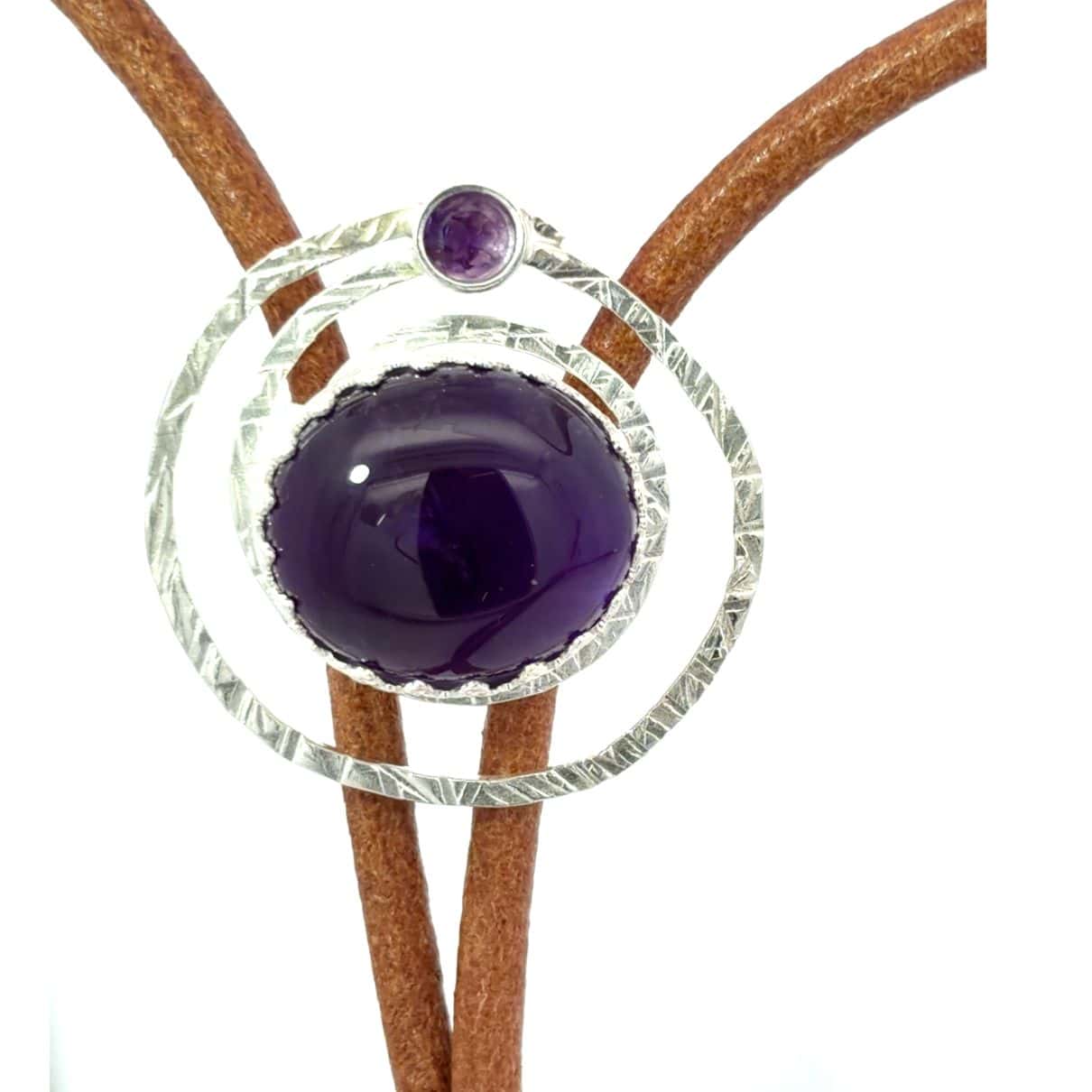
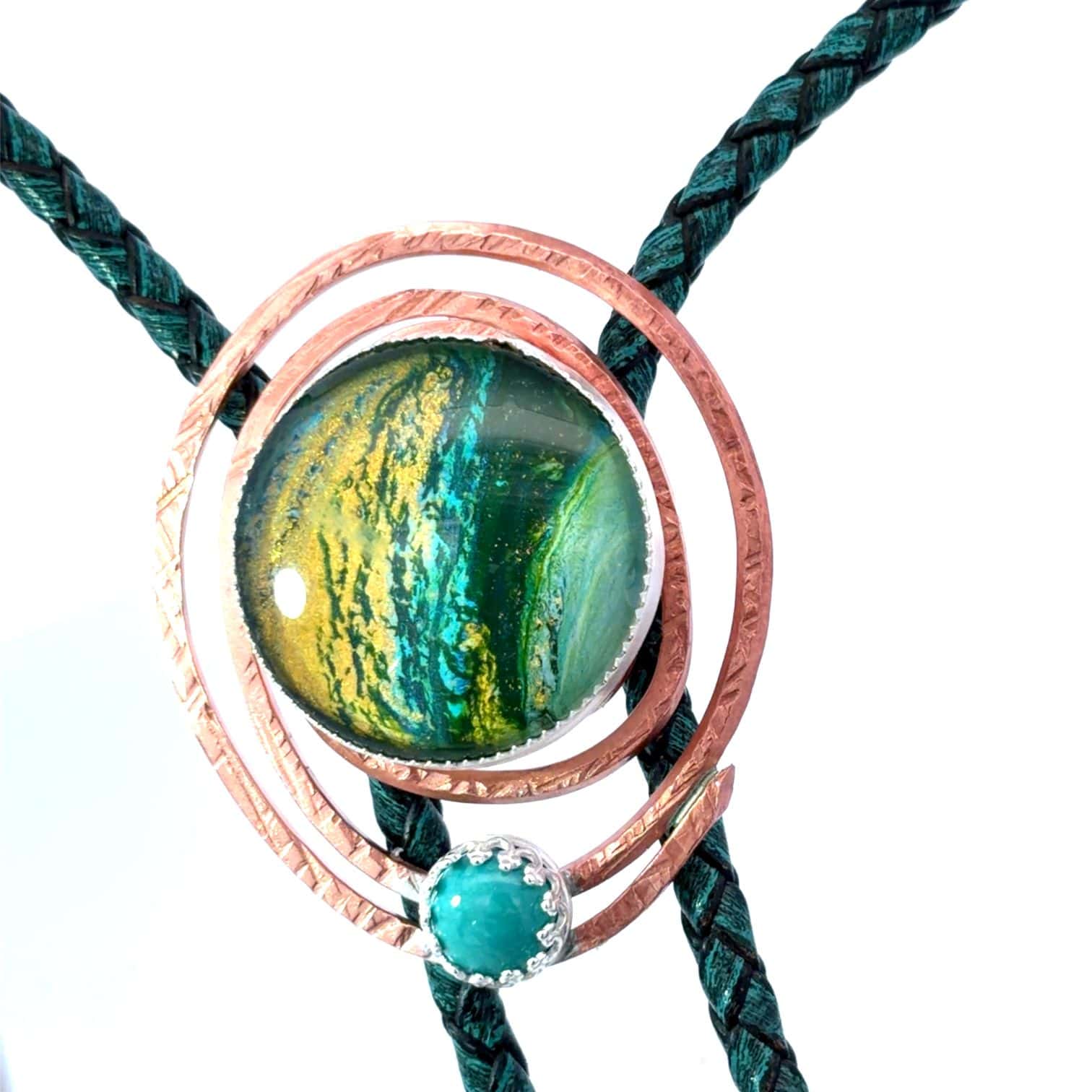
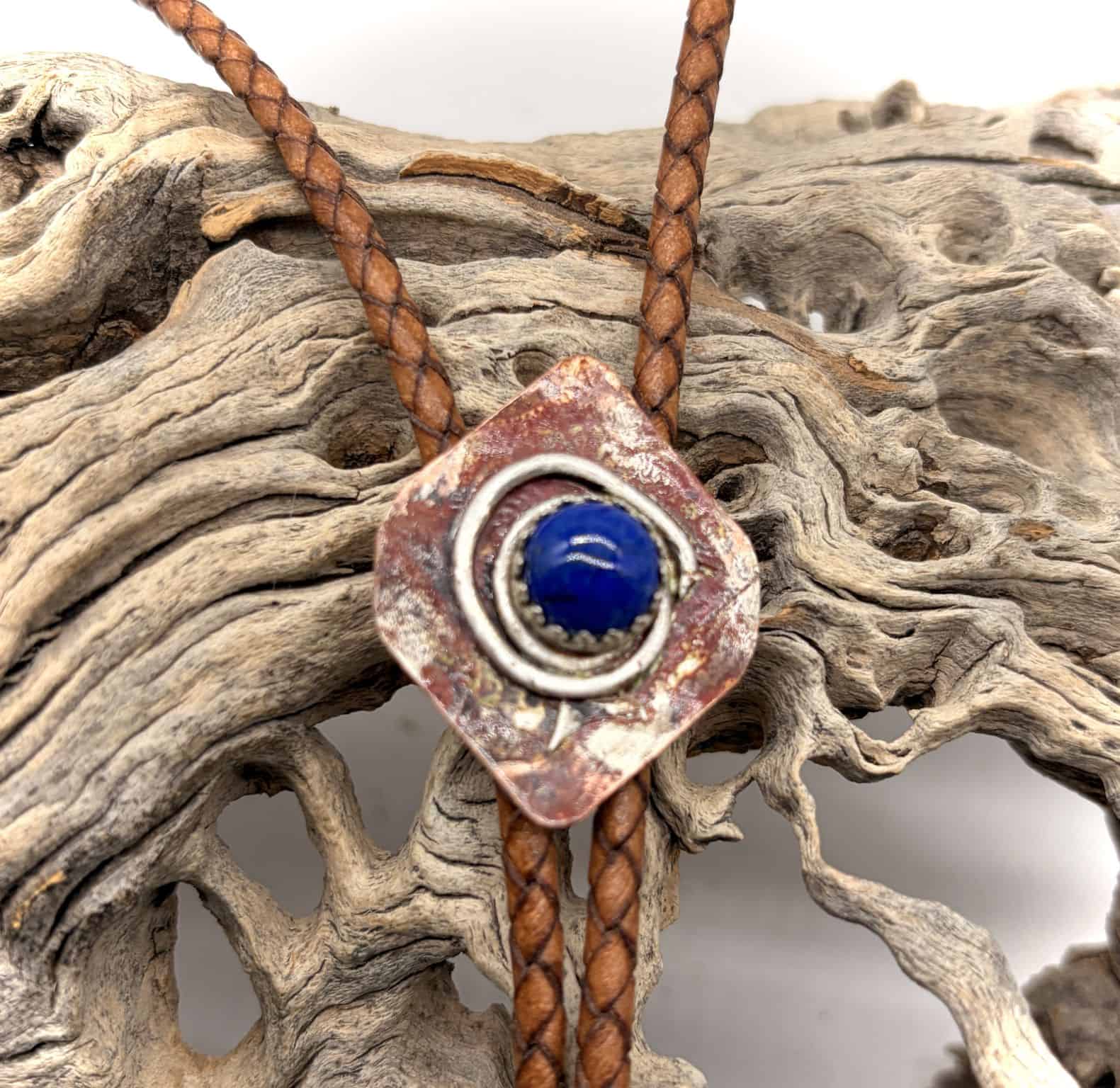
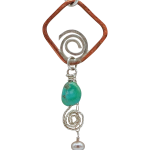
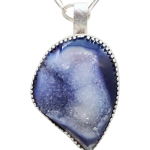
The original Bolo I designed featured the tried and true turquoise gem agains a sterling silver background. My brain started imagining other possibilities. What if I used copper? or steel? and what if I designed them in my signature Sacred spiral form? How about adding more non traditional gems, too? Endless possibilities! This design below features a custom dichroic gem and copper in the spiral format.
How the bolo tie became a Western icon
Once the form settled, the bolo tie moved fast through Western dress. By the mid-20th century, people wore it at rodeos, church, dances, and town meetings. That helped turn it from regional neckwear into a visible sign of Western identity.
Practicality helped. A bolo tie stayed in place, felt cooler in dry heat, and paired well with snap shirts or suits. A ranch hand could wear one to work. A groom could wear one to a wedding and still look at home in it.
It also left room for taste. One person chose a silver slide with turquoise. Another wore carved wood, coins, shell, or stamped metal. Because the design was simple, makers could shift it toward casual wear or formal dress without stripping away its Western feel.
The bolo tie in public life and pop culture
Country musicians, Western film actors, and television figures carried the look far beyond the Southwest. Politicians helped too, because the bolo tie offered regional style that felt less stiff than a standard necktie. When Arizona named it the official state neckwear in 1971, the accessory gained public weight.
What the bolo tie says about culture and identity
A bolo tie can be fashion, but history gives it more than surface appeal. For many wearers, it says home, region, and memory. For many makers, it is a small canvas for serious work. Because of that, the piece sits where style and identity meet.
A symbol of the American West that keeps changing
In one town, a bolo tie is Sunday best. Elsewhere it is a nod to ranch roots. In a city bar or on a runway, it can read as vintage, sharp, or playful. The object stays the same, but the setting changes the message.
That flexibility helps explain its long life. Some trends flare up and fade. The bolo tie keeps returning because it can hold heritage and personal style at the same time. It is old enough to carry history, yet open enough to feel current.
I love knowing that the bolo tie never disappeared. It simply moved between circles. You still see it at Western weddings, rodeos, gallery openings, and state events. At the same time, younger wearers pair it with denim jackets, plain white shirts, and tailored suits.
Follow me on my design journey and become a collector. Not only do my collectors receive first look at my newest designs but the also have the advantage of Collector-only discounts and specials. It’s Free. In addition you Get 15% off your first order.
Here’s How
Shop Here for all my Designs

Leave a Reply