Earring materials tell you what people prized, what they could reach, and what they believed.
Bone, shell, copper, silver, gold, glass, and steel are all part of the history. The story begins close to the ground and ends in a world full of new options, but the old meanings still cling to the surface. The earliest earrings were made from what people could find nearby. Early earrings came from place. People used what beaches, forests, rivers, and animal remains gave them.
Bone, shell, stone, and wood gave the first earrings their shape.
- Bone was tough yet light.
- Shell had a soft shine that needed little work.
- Stone offered weight and color,
- Wood was easy to cut, drill, and smooth.
Most of these first pieces were handmade with simple tools. They were often uneven, slightly off-center, and full of tool marks. That didn’t make them crude. It made them personal. Each earring carried the touch of the person who shaped it and the land that supplied it. Because wood, fiber, and thin shell break down over time, much of this early record is gone. What survives hints at a larger past, one in which people were already turning ordinary matter into something worn with care.
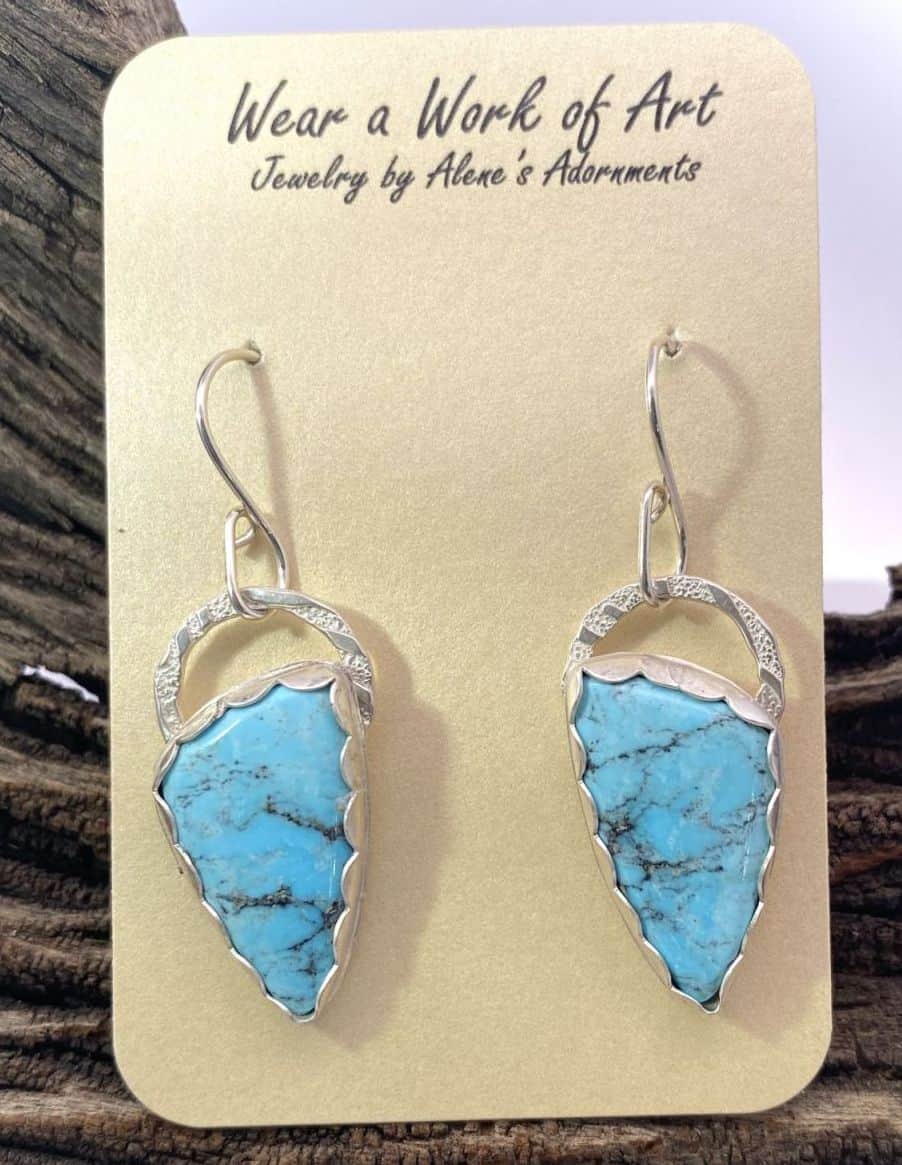
I love knowing this about these early earrings. This is the way most artisans today still create their designs. In particular, I create one of a kind pairs for my customers. Those who purchase from me know that their selection is one of a kind and will not be seen worn by others. What a plus! the earrings below feature Sonoran turquoise gemstones in sterling silver.
How metals changed the history of earring materials
Metal changed jewelry in a big way. Once people learned to heat, hammer, and cast it, earrings became brighter, stronger, and easier to keep. Copper bent well under a hammer and held a clean curve. Bronze, a copper alloy, added strength. Hoops, spirals, wires, and dangling forms became easier to make and harder to break. It also travels well. Traders could carry raw metal or finished ornaments over long distances, and families could melt, reshape, or pass pieces down instead of replacing them.
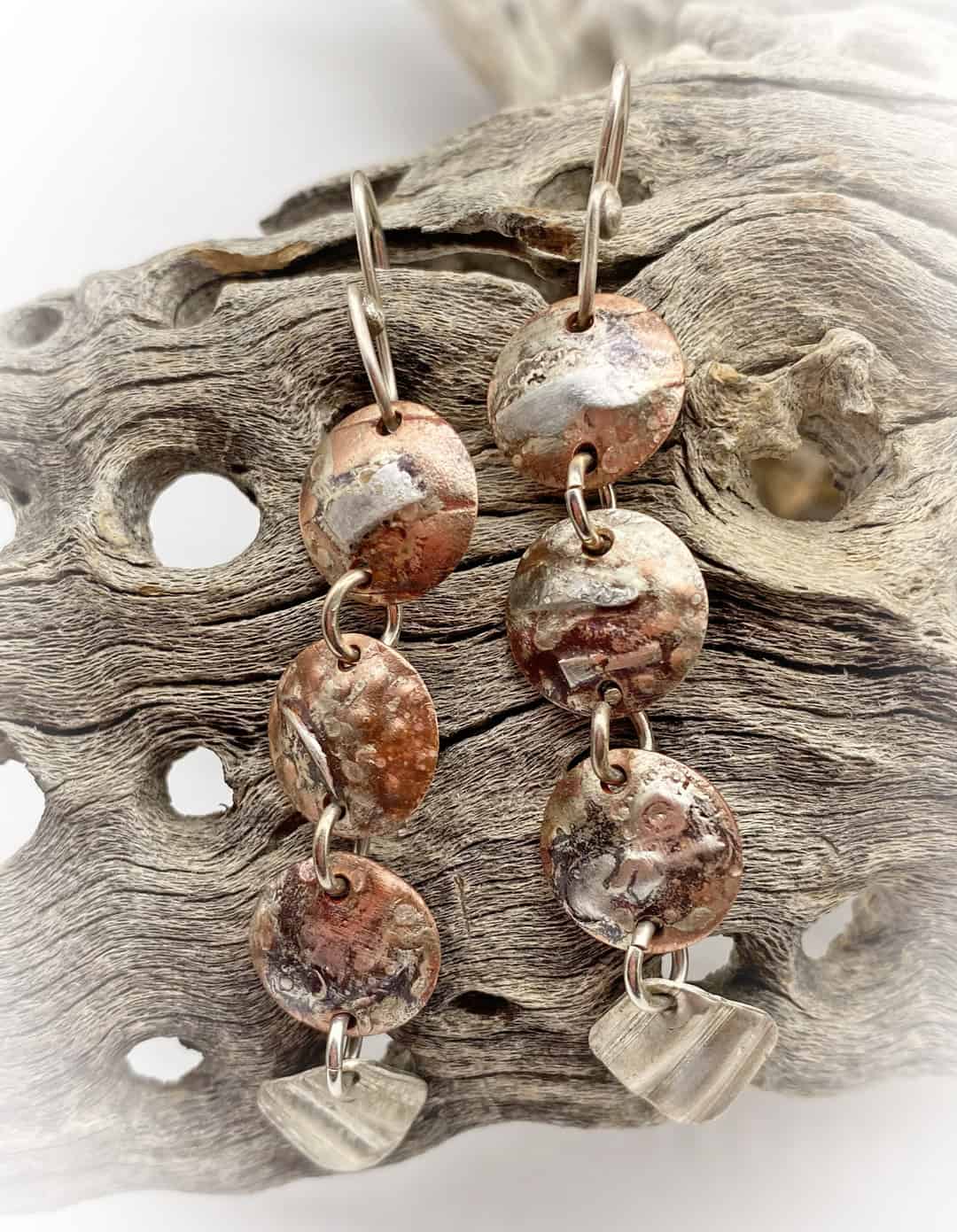
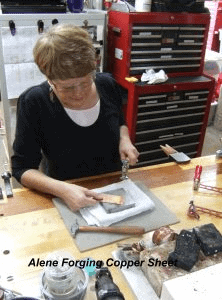
I worked in copper more in my early days. It was considered a learning material because it was less expensive. This helped calm my fears early on and gave me the freedom to experiment and make mistakes. Shown here is one of the designs I still use in copper to this day. These AleneAnn earrings.. yes named after me, are created in copper with sterling silver fused into the base.
Silver and gold turned earrings into symbols of wealth
Silver caught light with a cool glow, while gold kept its warm color for centuries. Both were rare enough to matter, and both held value far beyond ornament.
Priests, rulers, and wealthy households wore them as public proof of power, taste, and access. Gold was beautiful, and it was also portable wealth.
That mix of shine and scarcity changed the meaning of earrings. The material itself could carry more social force than the design.
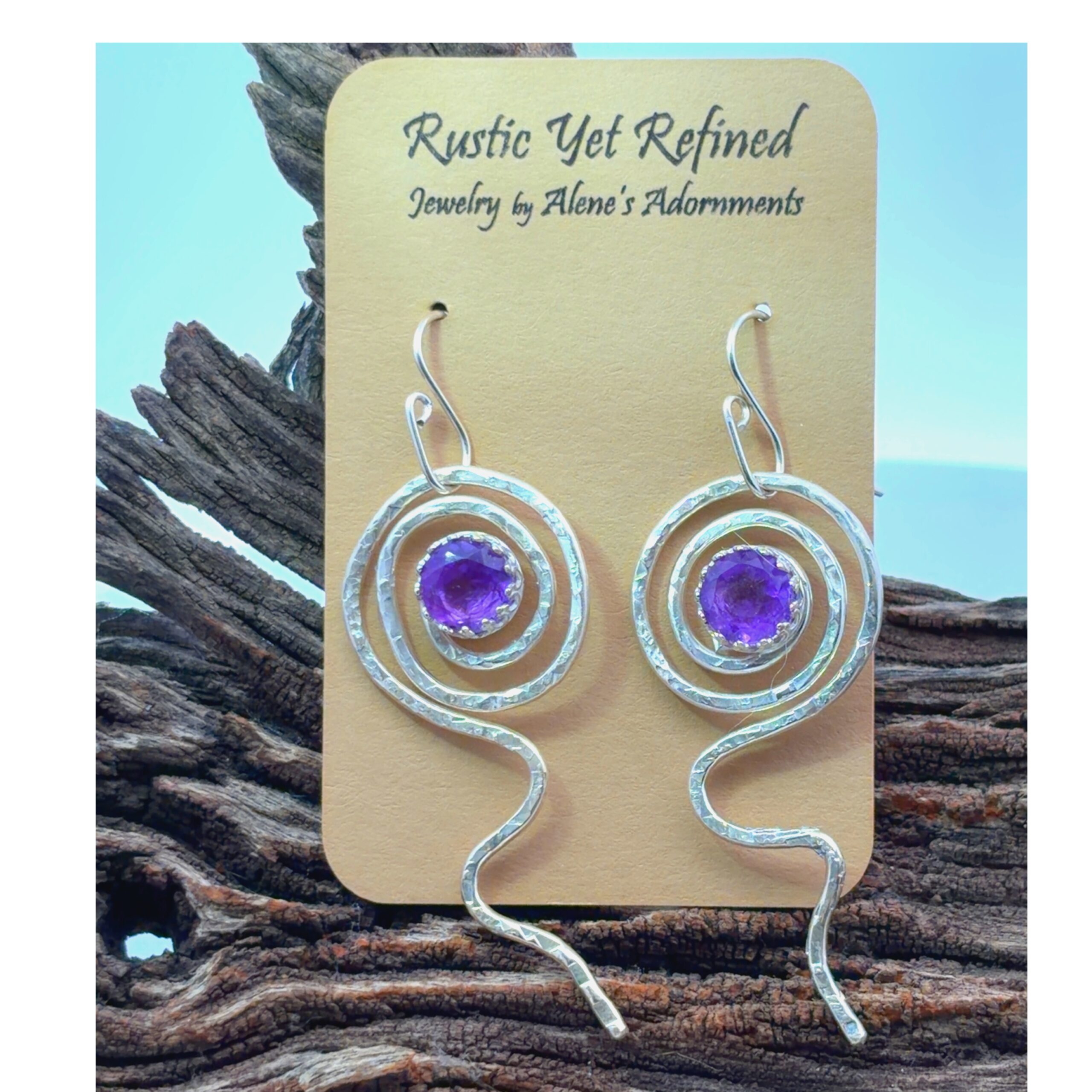
I tend to work primarily in silver these days. Over the years I have learned the best ways to create unusual beautiful pieces. This is one of my newest designs featuring Amethyst in my Sacred Spiral collection.
Different eras and empires gave earrings new styles and materials
Egyptian jewelers loved gold and colored inlays, and some pieces paired metal with glass. In Mesopotamia, earrings could feature gold, lapis lazuli, and carnelian, all rich in color and cost.
Greek designs often looked lighter and more balanced. Roman taste grew broader because the empire drew in pearls, gems, and fine metalwork from far beyond Italy.
In these cultures, earrings could show rank, personal taste, and access to goods from far away.
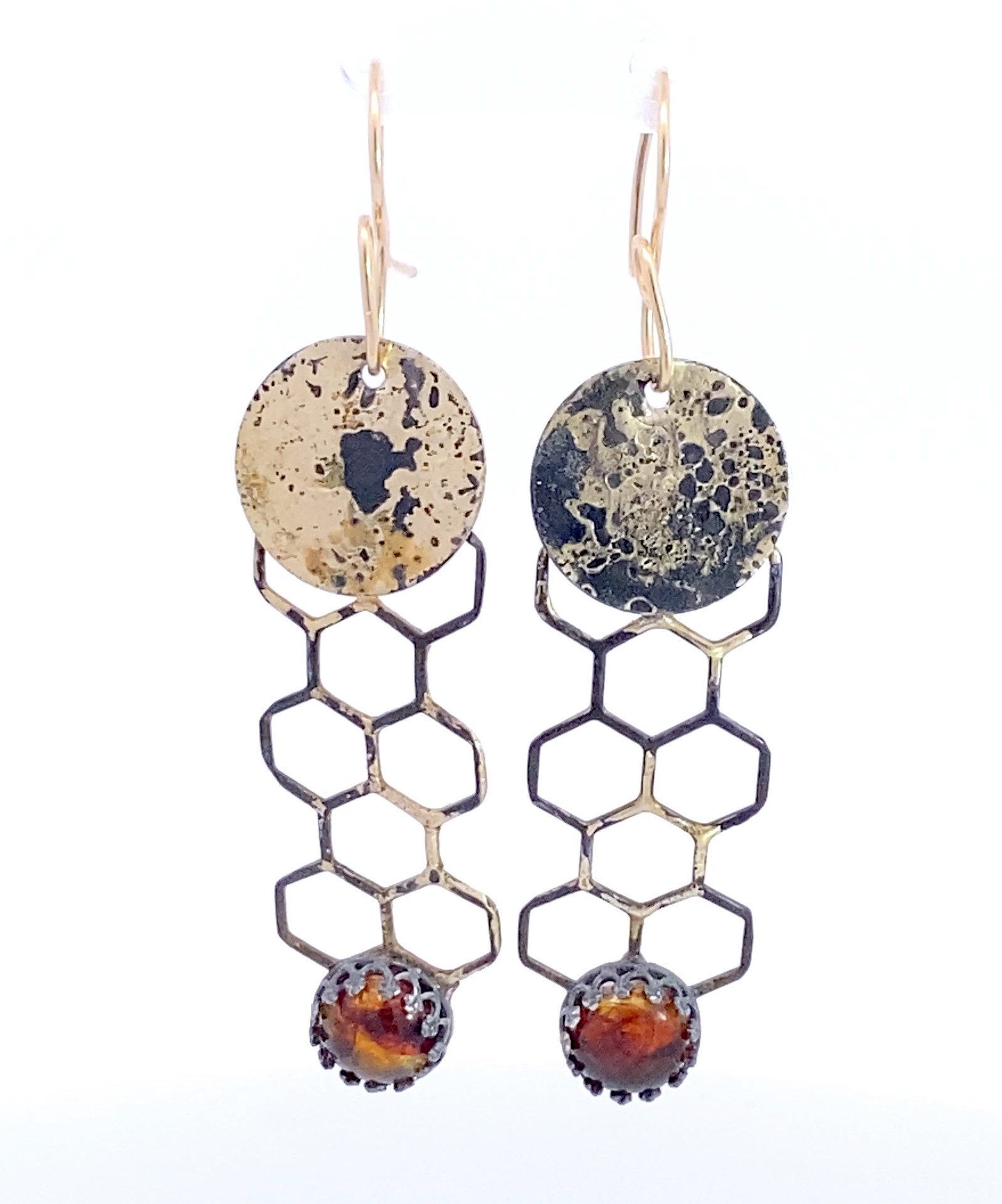
Gold kept calling to me! Once I discovered the option to drench gold on steel, I was hooked. These earrings are from my Golden Steel collection. The honeycomb design and the steel discs are both drenched in 22K gold. A tiny Baltic Amber gem finished the design.
Today’s jewelry still borrows from the past
Modern earrings look new, but their roots are old. Steel hoops echo ancient circles. Resin and acrylic repeat the old wish for light weight, bold color, and easy shaping.
Recycled silver and gold bring old metals back into use, while lab-grown stones continue the long search for beauty people can afford. Even surgical steel and titanium follow an old pattern. People still want earrings that last, feel good on the skin, and say something about who they are.
The past stays close to the ear. Even now, material is never only about looks.
Follow me on my design journey and become a collector. Not only do my collectors receive first look at my newest designs but the also have the advantage of Collector-only discounts and specials. It’s Free. In addition you Get 15% off your first order.
Here’s How
Shop Here for all my Designs

Leave a Reply