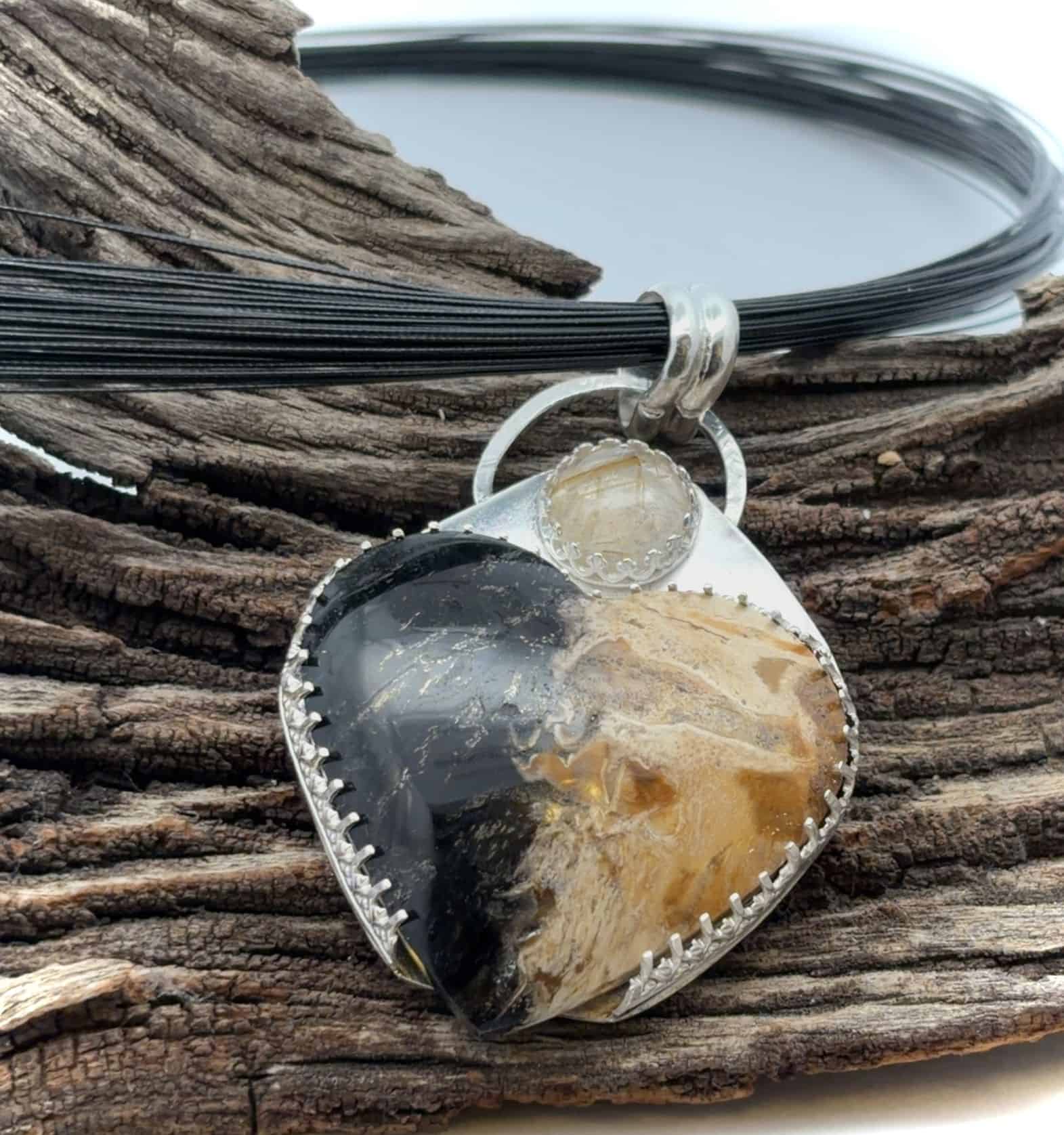
A polished petrified palmwood gem can look like a tiny fossil garden, filled with dots, circles, and branching lines. Yet it isn’t a gemstone crystal like ruby or diamond. It is ancient plant material whose original structure survived mineral replacement.
For jewelry lovers and fossil collectors, petrified palmwood root offers two stories at once: the story of an old palm forest and the story of the minerals that preserved it. Its history reaches from buried roots to museum collections, lapidary benches, and modern jewelry cases. I discovered this gem about 3 years ago and IMMEDIATELY fell in love with it. Whil the history is fascinating (see below for more) I was attracted to the inclusions and coloring of the gem.
What Petrified Palmwood Root Really Is
Petrified palmwood is fossilized material from ancient palms. The term can describe a palm trunk, stem, root, or material from the root zone, depending on the specimen. Over long periods, mineral-rich groundwater entered the buried plant tissue. Silica and other minerals filled spaces or replaced organic matter while retaining parts of the original internal structure.
“Fossil palm” is a broad collecting term. In scientific writing, Palmoxylon often appears as a form genus for fossil palm wood. Palm plants differ from familiar trees because their stems contain scattered vascular bundles rather than annual growth rings. Once those bundles mineralize, they can make striking patterns that are easy to recognize after cutting.
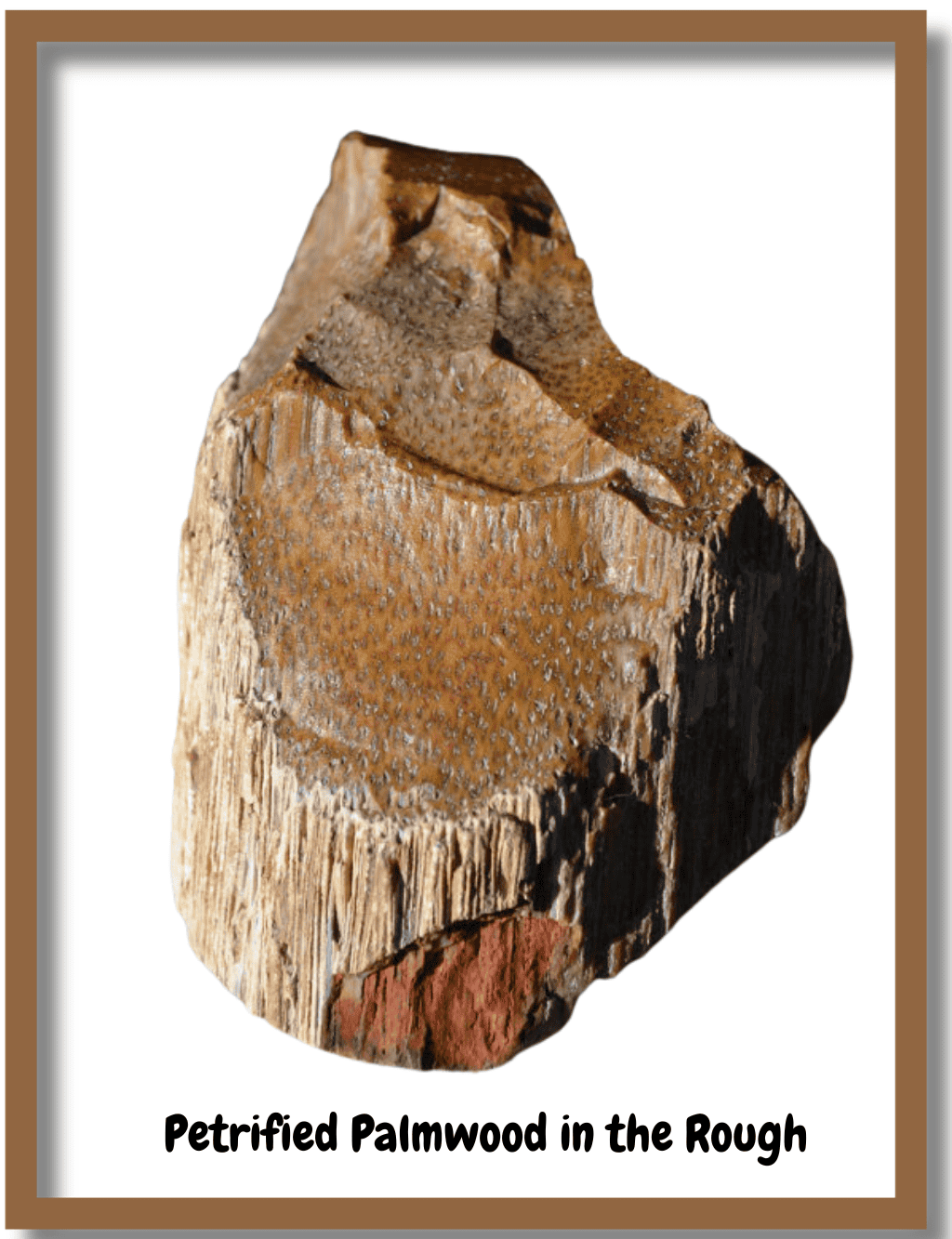
Why Roots Create Different Patterns From Palm Trunks
Palm roots may produce a busier design than straight stem material. They grow through soil, branch repeatedly, and contain smaller vascular structures. Burial can also compress, distort, or break the root tissue before minerals harden it.
After polishing, those details may appear flower-like, spotted, lacy, or speckled. A slab cut across a root can show rounded openings and clustered bundles. A lengthwise cut may reveal trails, waves, or irregular lines instead.
Color comes from the mineral mix, not from the original palm. Silica often creates hard, glassy areas. Iron compounds can add tan, rust, red, or yellow, while manganese may bring gray, brown, or black markings. Because groundwater chemistry differs within a deposit, two pieces from the same area can look unrelated.
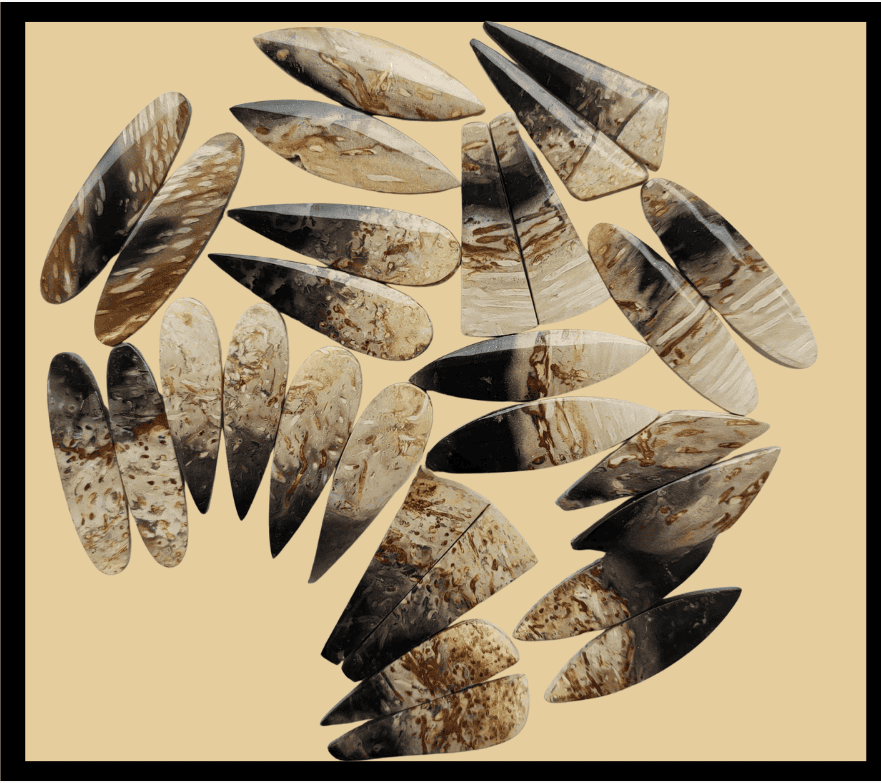
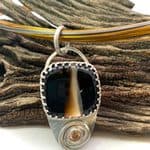
The Gems I use in my designs are from Indonesia. The groundwater there tends to produce tones of black and light tan, or caramel as I like to call it. You may find other color combinats if the palms are found in other area of the world. For me, I LOVe the blacks and browns. You can get a feel for the color combinations I love in the image below. Every gems is unique.Additionally what I love about gems from this region.. they are virtually millions of years old.
From Fossil Specimen to Polished Jewelry
Lapidary artists reveal palmwood’s hidden face with a diamond saw. First, they inspect the rough for fractures, porous zones, and promising pattern direction. Then they make a careful cut, often discovering that the interior looks nothing like the weathered surface.
A cutter may slice across the structure for round, clustered designs. Another cut may follow the grain-like direction for flowing veins and elongated marks. If the material has open fractures, a lapidary artist may stabilize it before shaping.
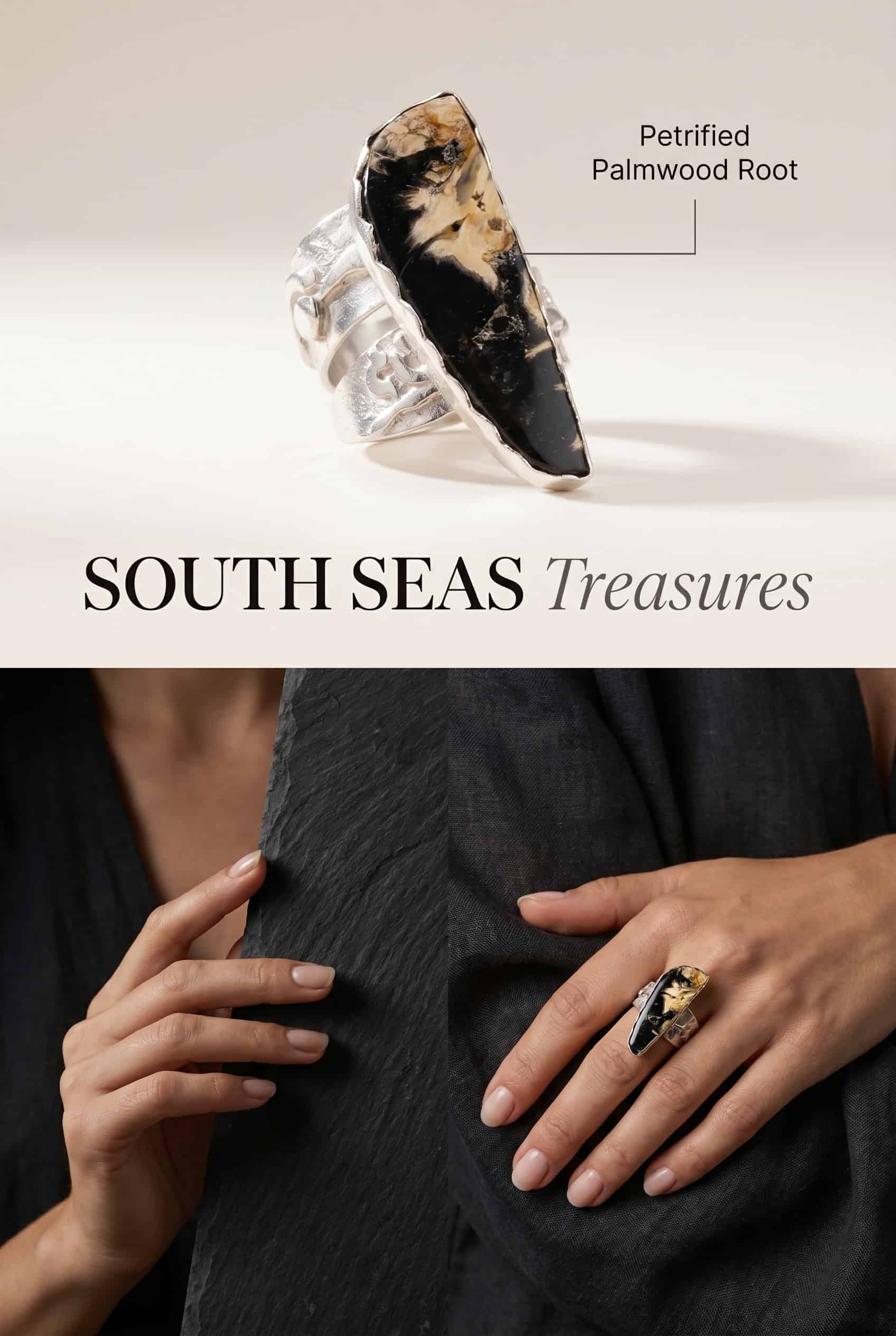
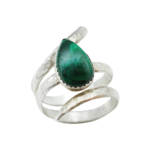
The finished stone often becomes a domed cabochon because a smooth curved surface protects fragile edges and shows the design well. Palmwood also appears in pendants, rings, belt buckles, carvings, display slices, and small specimen collections. My gems are created by 3 different lapidary people that I work with. They are all based in Indonesia. carving the raw stones into the beautiful gems is a highly skilled process. The image below showcases one of the fine silve rings I designed using this gorgeous gem.
My design Process for Petrified Palmwood
As a jewelry designer I use serveral methods for creating the finished piece. More information about my process can be found in this Video
For petrified palmwood the process is easy. I start with the gem that calls out to me. It could be a pair of gems created for earrings, It could be a larger gem with a more unusual shape or it could be one that will be perfect as a statement ring! Once I choose the gem I determine if I want to add a complementary gem to the design. In this case I normally choose Black onyx, Rutilated quartz, Mother of Pearl, Druzy quartz or Moonstone.
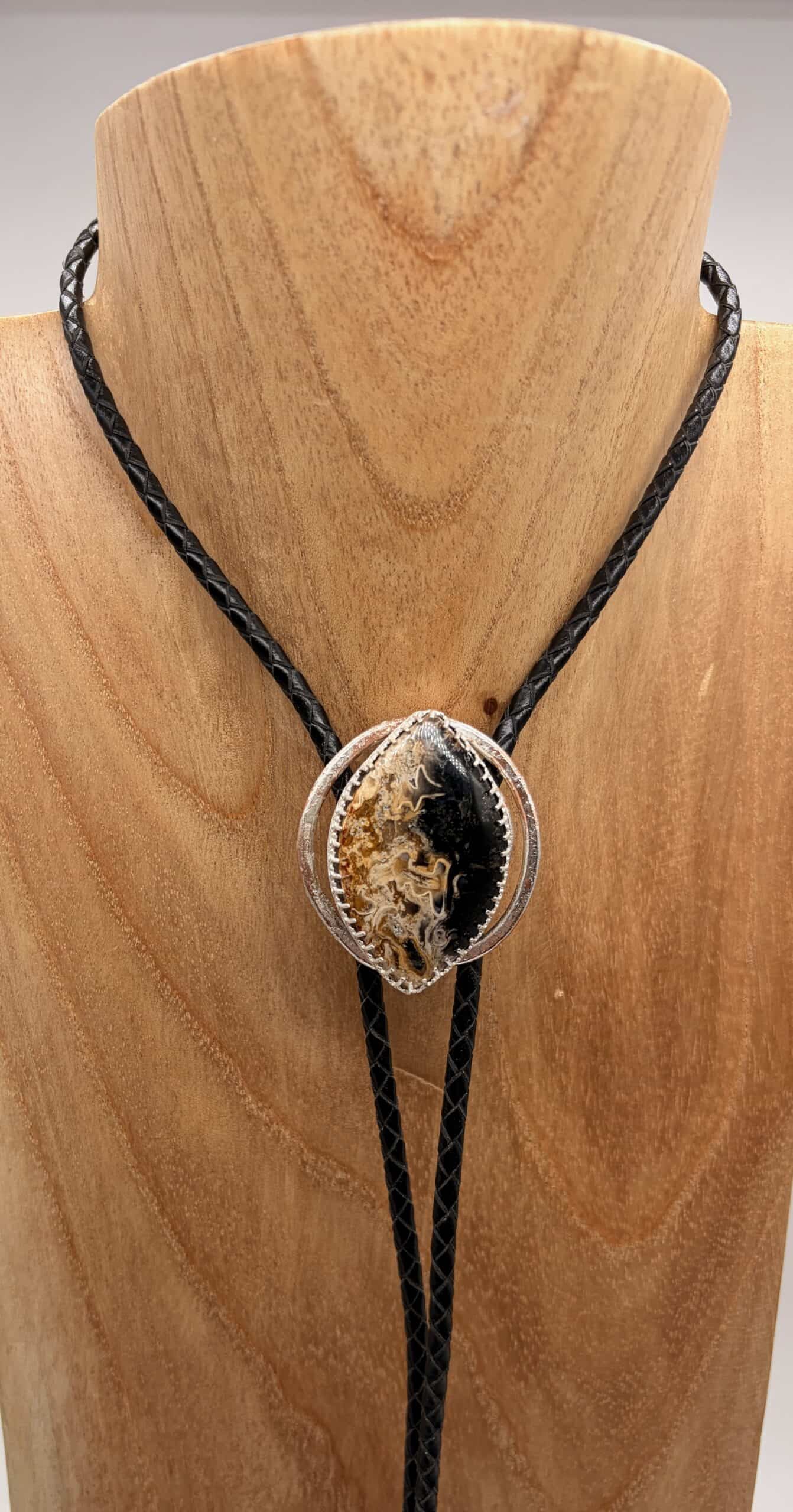
The next step is deciding upon the metal. Most of the time I choose Silver but have designed a few in Steel and gold. The result is stunning. This stage is the most exciting and fulfilling. I can start to see what the finished design will be. The next few hours… or sometimes days will get me to the final stages.Below is a new design I created as part of my Bolo Tie collection.
Caring for a Petrified Palmwood Root Gem
Use a soft, damp cloth to remove skin oils and dust. Then dry the piece well. Avoid harsh household chemicals, steam cleaning, and ultrasonic cleaners, especially if the stone has cracks, dye, resin, or stabilizing treatment.
Although silicified palmwood can be hard, a sharp impact may chip a polished edge or open a hidden fracture. Store jewelry separately from harder gems and metal pieces that can scratch its finish. Treated stones may need gentler care than dense, untreated material.
Follow me on my design journey and become a collector. Not only do my collectors receive first look at my newest designs but the also have the advantage of Collector-only discounts and specials. It’s Free. In addition you Get 15% off your first order.
Here’s How
Shop Here for all my Designs


Leave a Reply